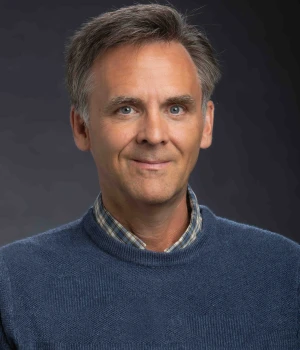
David Frick
- Professor, Chemistry & Biochemistry
Education
- Postdoctoral, Harvard Medical School
- PhD, Johns Hopkins University
- BA, Franklin & Marshall College
Teaching Schedule
| Course Num | Title | Meets |
|---|---|---|
| CHEM 602-001 | Biochemistry: Cellular Processes | MW 3:30pm-4:45pm |
| CHEM 602G-001 | Biochemistry: Cellular Processes | MW 3:30pm-4:45pm |
| CHEM 604-001 | Biochemistry: Metabolism | MWF 1:30pm-2:20pm |
| CHEM 604G-001 | Biochemistry: Metabolism | MWF 1:30pm-2:20pm |
| CHEM 932-001 | Advanced Seminar in Biochemistry | No Meeting Pattern |
Research Interests
My lab mainly studies the biochemistry of viral proteins and small molecules that interact with them in order to discover new antiviral drugs. Our main interest, presently, is in targeting helicases encoded by:
- The hepatitis C virus (HCV)
- Dengue virus (DENV)
- West Nile Virus
- SARS-CoV-2 (the virus causing COVID-19)
Helicases are motor proteins that separate DNA and RNA duplexes and dislodge proteins bound to nucleic acids in reactions fueled by ATP hydrolysis. We also study helicases from human cells, and other viral proteins as drug targets including polymerases, proteases and capsid proteins. The goal of most projects in the lab is either to understand how these proteins help copy viral genomes or to understand how small molecule drugs block virus growth by directly interfering with these important enzymes.
A molecular model of a fluorescent NS3 helicase inhibitor bound to the protein overlaid on a picture of human cells infected with HCV. The human cells also contain the helicase inhibitor, which is visualized in the cytoplasm using fluorescence microscopy Techniques used in our lab:
-
- Recombinant DNA technology
- Protein purification
- Enzymology
- Steady state and transient state kinetics
- Tissue Culture
- Fluorescence Microscopy
- Quantitative RT-PCR
- High throughput screening
- Absorbance spectroscopy
- Fluorescence spectroscopy
- TR-FRET, alpha-screen and FP assays
- Biocalorimetry
- Molecular Modeling